AV Integration
Whole-home audio and theater design in Sedgefield
Peters Audio Video works on distributed audio, home theaters, and networking projects in south Charlotte, including retrofits inside Sedgefield's postwar brick ranches and additions to newer custom builds.
AV integration in a postwar neighborhood
Sedgefield's housing stock creates two distinct kinds of AV projects. In original or lightly updated 1950s and 1960s homes, integrating whole-home audio or a dedicated theater room means working around existing framing, finished ceilings, and electrical capacity that was never designed for it. In newer custom builds and major renovations, the opportunity is different: systems can be planned and wired in from the start, which typically produces a cleaner, more flexible result at a lower incremental cost than retrofitting later.
Peters Audio Video works across both scenarios, and the starting point for either is the same: understanding the home's existing construction, the homeowner's priorities (background music throughout the house, a dedicated theater, or both), and the budget and timeline available for the work.
Whole-home audio
Distributed audio systems let homeowners play music in multiple rooms, either as a synced whole-house experience or independently by zone. In an existing home, in-wall or in-ceiling speakers require running wire through finished walls and ceilings — feasible in many Sedgefield ranches thanks to accessible attic space, but dependent on each home's specific framing and insulation. Where running wire isn't practical, wireless speaker systems offer a lower-disruption alternative, generally with some trade-offs in installation flexibility compared to a fully wired system.
Home theaters
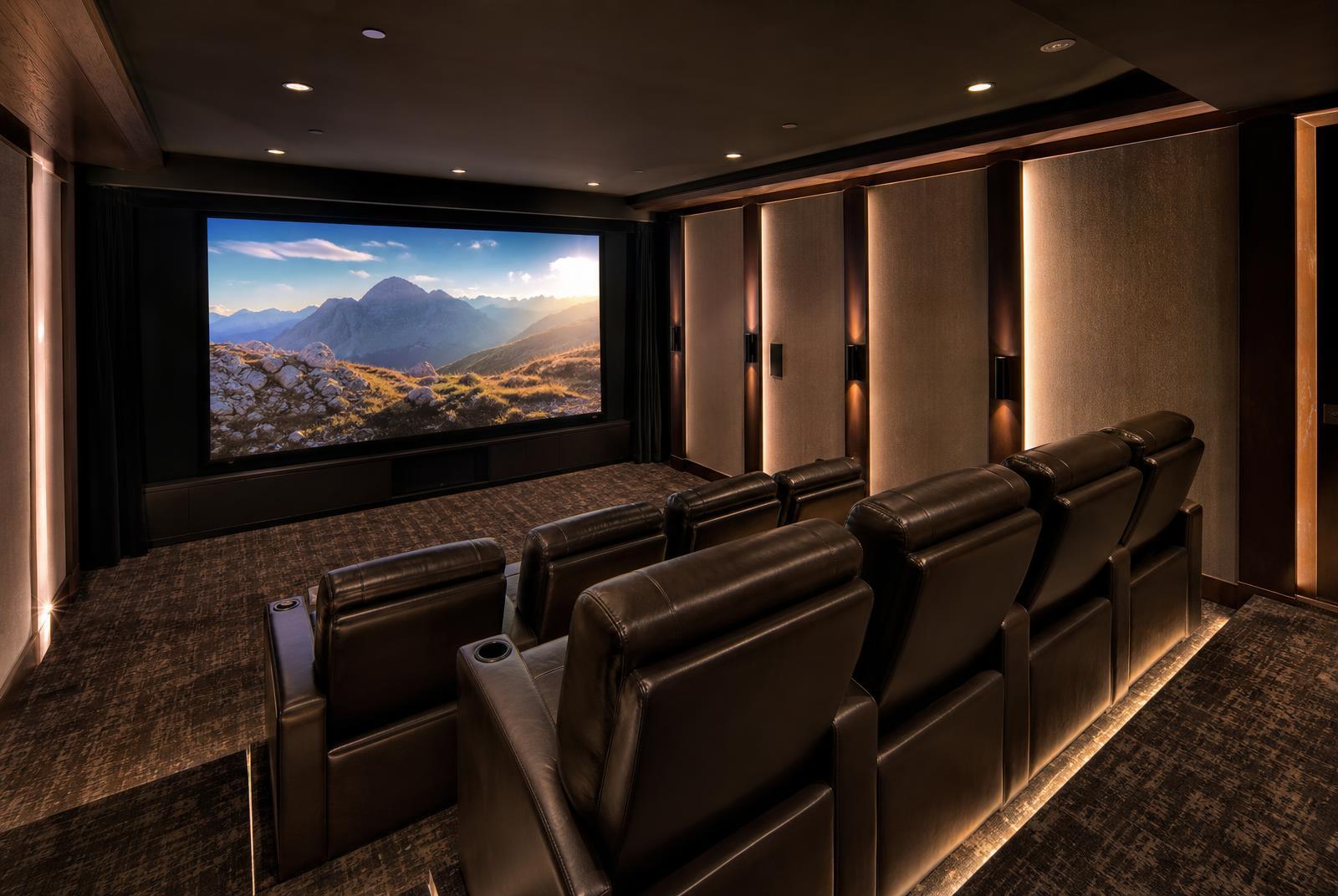
A dedicated home theater room involves more than a large television: it typically includes acoustic treatment, controlled lighting, a projection or display setup sized to the room, and a seating layout planned around sightlines and speaker placement. In an older home, converting an existing room to a theater often requires evaluating structural elements like ceiling height, window placement (for light control), and electrical capacity, all of which factor into what's realistic for a given space.
Networking that supports AV systems
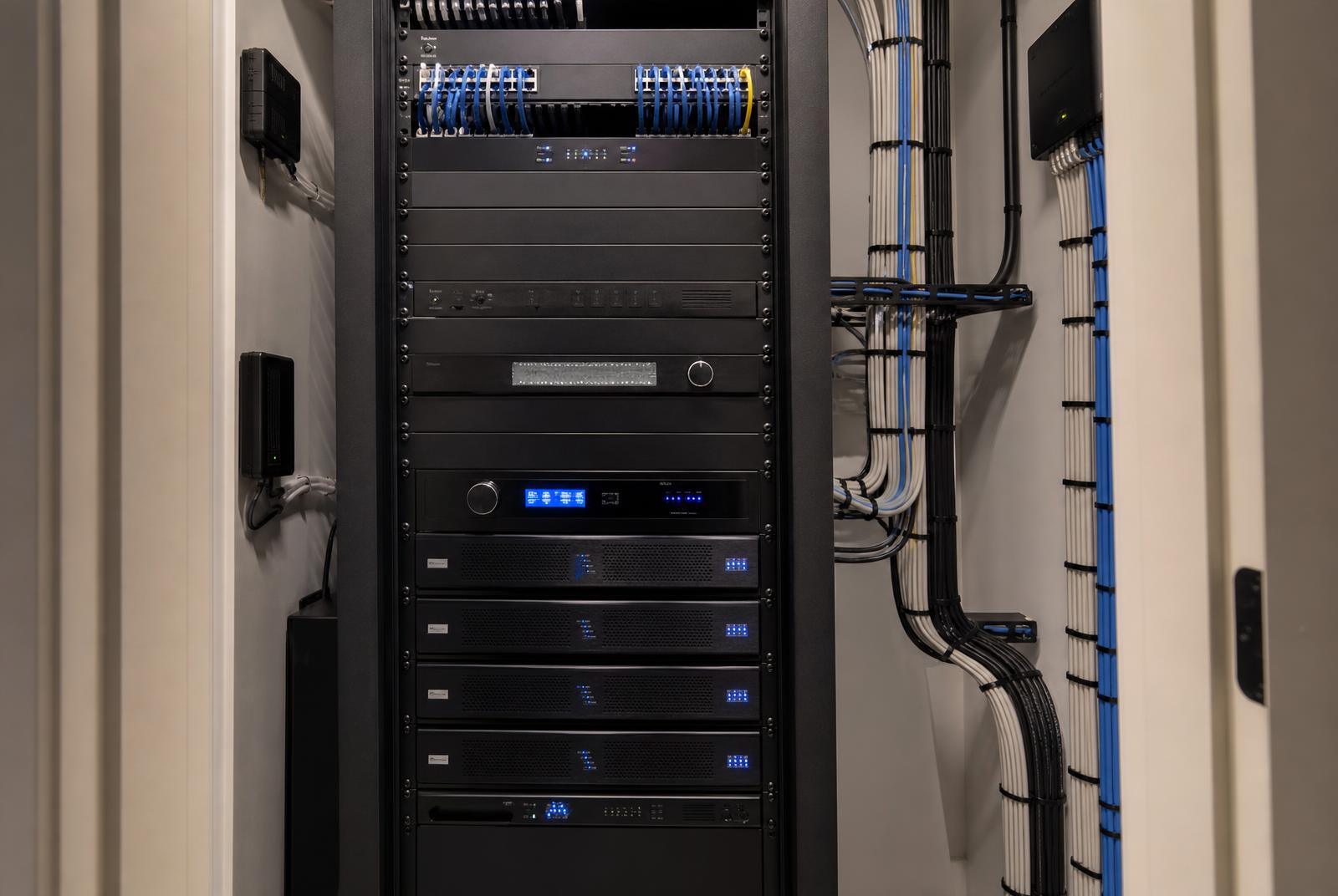
Modern AV systems — streaming devices, networked audio, and smart displays — depend on reliable, sufficiently fast network infrastructure throughout the home. As with the broader smart-home networking considerations on our Smart Homes page, this often means planning for wired network drops to key equipment locations and adequate Wi-Fi coverage throughout the house, rather than relying on a single router to carry every device.
Retrofits in postwar construction
Retrofitting AV systems into a home built in the 1950s or 1960s comes with a consistent set of considerations: attic and crawl space access for running cable, electrical panel capacity for additional circuits, and wall construction that may make some in-wall installations more involved than in newer drywall construction. None of these rule out a strong AV outcome — they simply shape which approach (wired, wireless, or a hybrid) makes the most sense for a specific home.
The Peters Audio Video process
1. Site assessment
A walkthrough of the home identifies existing wiring, network infrastructure, electrical capacity, and any structural considerations relevant to the homeowner's goals — whether that's a single media room or a full whole-home system.
2. System design
Based on that assessment, a system is designed around the home's construction and the homeowner's priorities: speaker and equipment placement, network architecture, and control options.
3. Installation
Installation is sequenced around the home's existing conditions — coordinated with other renovation trades where relevant, or scheduled independently for a standalone retrofit project.
4. Calibration and handoff
Once installed, systems are calibrated for the specific room (speaker levels, display settings, network configuration) and homeowners are walked through day-to-day use and controls.
Coordinating with a broader build
For homeowners already working with Peters Custom Homes on a new build or major rebuild, AV planning is far more effective when it happens early — during the same phase as electrical rough-in — rather than as an afterthought once walls are finished. Coordinating AV, networking, and lighting control plans with the builder and designer at that stage tends to produce a cleaner final result.
Discover Sedgefield is an independent editorial resource. Peters Audio Video is referenced here as a local informational partner; we may have a referral relationship with some firms mentioned on this site. See our Advertising Disclosure for details.
Related building topics
- Smart Homes
Automation beyond audio and video.
- Custom Homes
Planning AV wiring during a new build.
- Our Network
Meet the local firms we reference.