Smart Homes
Smart home systems in Sedgefield's older homes
Adding modern automation, networking, and security to a 1950s brick ranch is straightforward in principle but different in practice than wiring new construction. Here's what that actually involves.
Why older homes need a different approach
A home built in the 1950s or 1960s was never designed with structured wiring, distributed Wi-Fi, or networked devices in mind. Wall cavities may be filled with insulation added decades after original construction, plaster or solid-wood-lath walls can be harder to fish wire through than modern drywall, and electrical panels may have limited capacity for additional smart-home circuits. None of that makes smart-home upgrades impractical in Sedgefield — it just means the planning has to account for the house that's actually there rather than a generic new-build wiring diagram.
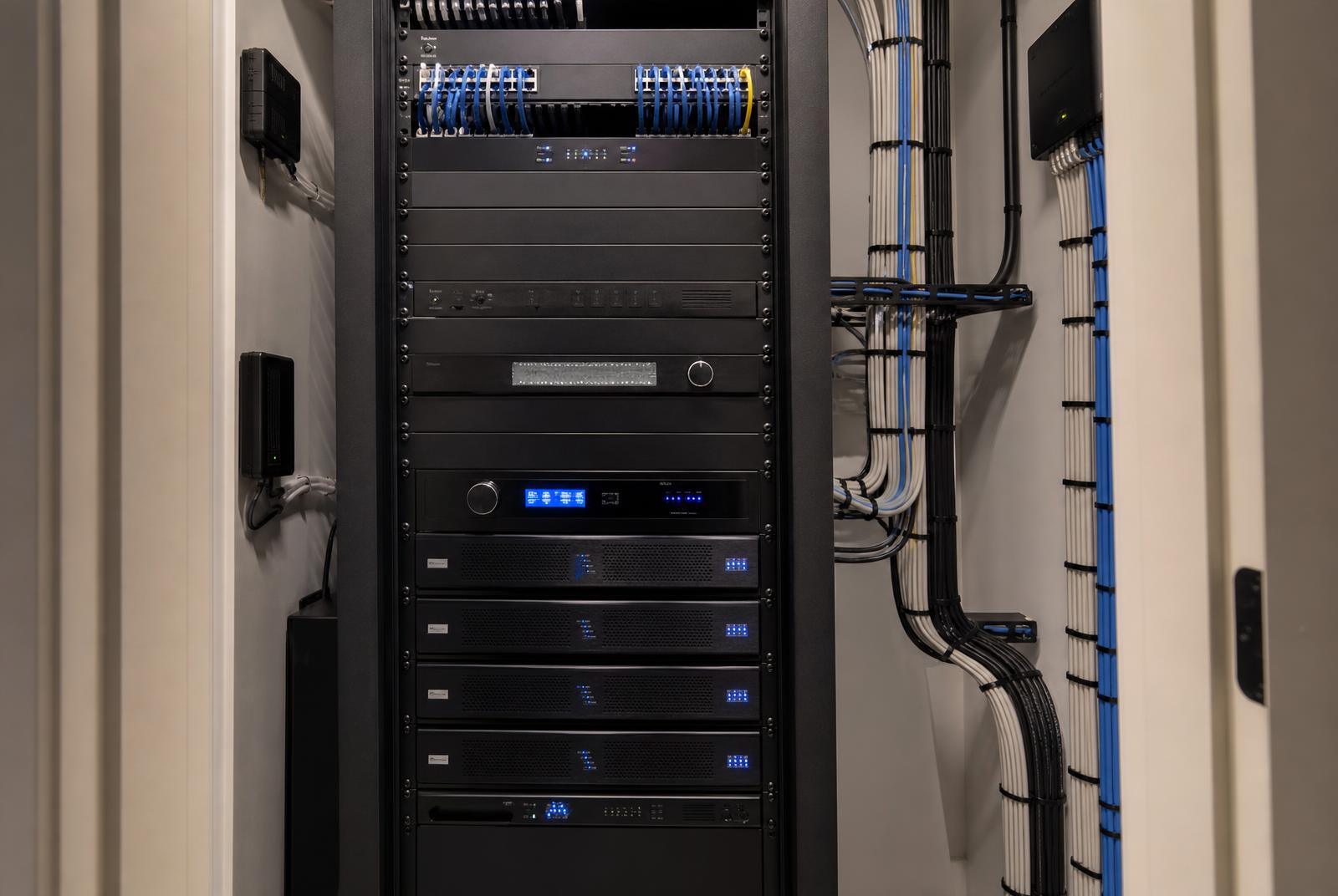
Wiring retrofits
Retrofitting structured wiring into an existing home generally involves one of two approaches: running new low-voltage cable through accessible paths — attics, crawl spaces, and existing chases — or relying more heavily on wireless and powerline technology where fishing new cable isn't practical. Attics and crawl spaces in Sedgefield ranches are often more accessible than in multi-story new construction, which can make certain retrofits more straightforward than homeowners expect, though every house is different and an on-site assessment is the only reliable way to know what a specific project will require.
Networking as the foundation
Reliable whole-home Wi-Fi and wired network connections are the backbone that most other smart-home functions depend on — locks, cameras, thermostats, and streaming devices all rely on a stable network. In an older home with thicker exterior walls or a layout that creates dead zones, that often means planning for multiple access points or a mesh network system rather than assuming a single router will reach every room.
Lighting control
Smart lighting can be added at different levels of integration: simple smart bulbs that require no rewiring, smart switches that replace existing wall switches (subject to having a neutral wire present, which isn't guaranteed in older wiring), or fully wired lighting control systems installed during a broader renovation. The right choice depends heavily on the home's existing electrical wiring and whether a renovation is already underway that makes deeper access possible.
Motorized shades
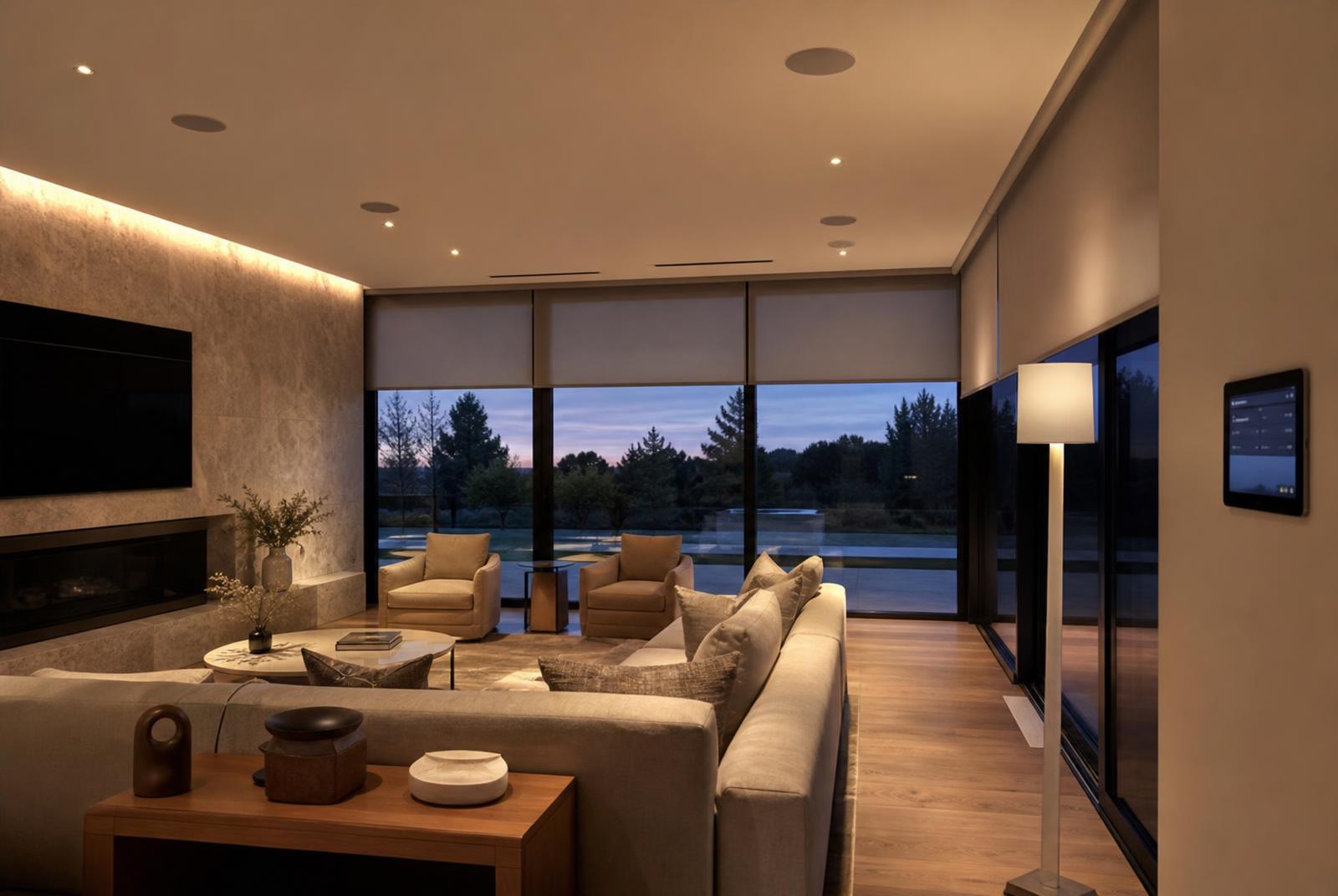
Motorized shades are one of the more popular retrofit additions in older homes because many models can run on battery power or a low-voltage transformer rather than requiring new wiring to every window. Deciding on shade placement and window measurements early — ideally before other renovation work is finished — helps avoid costly rework later.
Security systems
Modern security systems for older homes typically combine door and window sensors, cameras, and smart locks with a central hub or app-based monitoring. Installation considerations include existing door hardware compatibility, exterior wall construction for camera mounting, and network coverage at entry points — all worth reviewing during a site assessment rather than assuming a one-size-fits-all kit will work identically in every Sedgefield home.
Timing it with other work
The most efficient time to add extensive smart-home wiring is during a broader renovation or rebuild, when walls are already open for other reasons. Homeowners planning a kitchen renovation, addition, or full rebuild through Peters Custom Homes have a natural opportunity to add structured wiring, additional electrical capacity, and in-wall speaker or shade wiring at a lower incremental cost than a standalone retrofit after the fact. That said, plenty of smart-home upgrades — networking, wireless lighting, and battery-powered shades — can be added to a home at any time without a full renovation.
For homeowners specifically interested in whole-home audio and home theater systems, see our AV Integration page, which covers similar retrofit considerations for audio and video systems in more depth.
Discover Sedgefield is an independent editorial resource. Firms mentioned here are referenced as local informational partners; we may have a referral relationship with some firms mentioned on this site. See our Advertising Disclosure for details.
Related building topics
- AV Integration
Whole-home audio and theater design.
- Custom Homes
Building smart-home-ready from day one.
- Interior Design
Where design meets technology.