Lifestyle
A day in Sedgefield
Walkability, community feel, and how the seasons play out in a quiet, tree-covered corner of south Charlotte.
Mornings
Mornings in Sedgefield tend to be quiet — dog walkers and joggers on the curving interior streets, the occasional CMS school bus, coffee runs to Park Road or Montford Drive rather than a walkable corner cafe within the neighborhood itself. Sedgefield is more drive-or-bike-to-amenities than walk-out-your-door, which sets it apart from Dilworth's East Boulevard strip, though several streets do connect fairly directly to Park Road on foot or by bike for those willing to walk ten to fifteen minutes.
Weekday rhythm
With Uptown roughly ten minutes north, many residents commute for work while a growing number work from home, taking advantage of the neighborhood's relative quiet. Afternoons often mean pickup from Sedgefield Elementary or Sedgefield Middle, then errands at Park Road Shopping Center — a grocery run, a stop at a longtime local shop, or a coffee.
Weekends
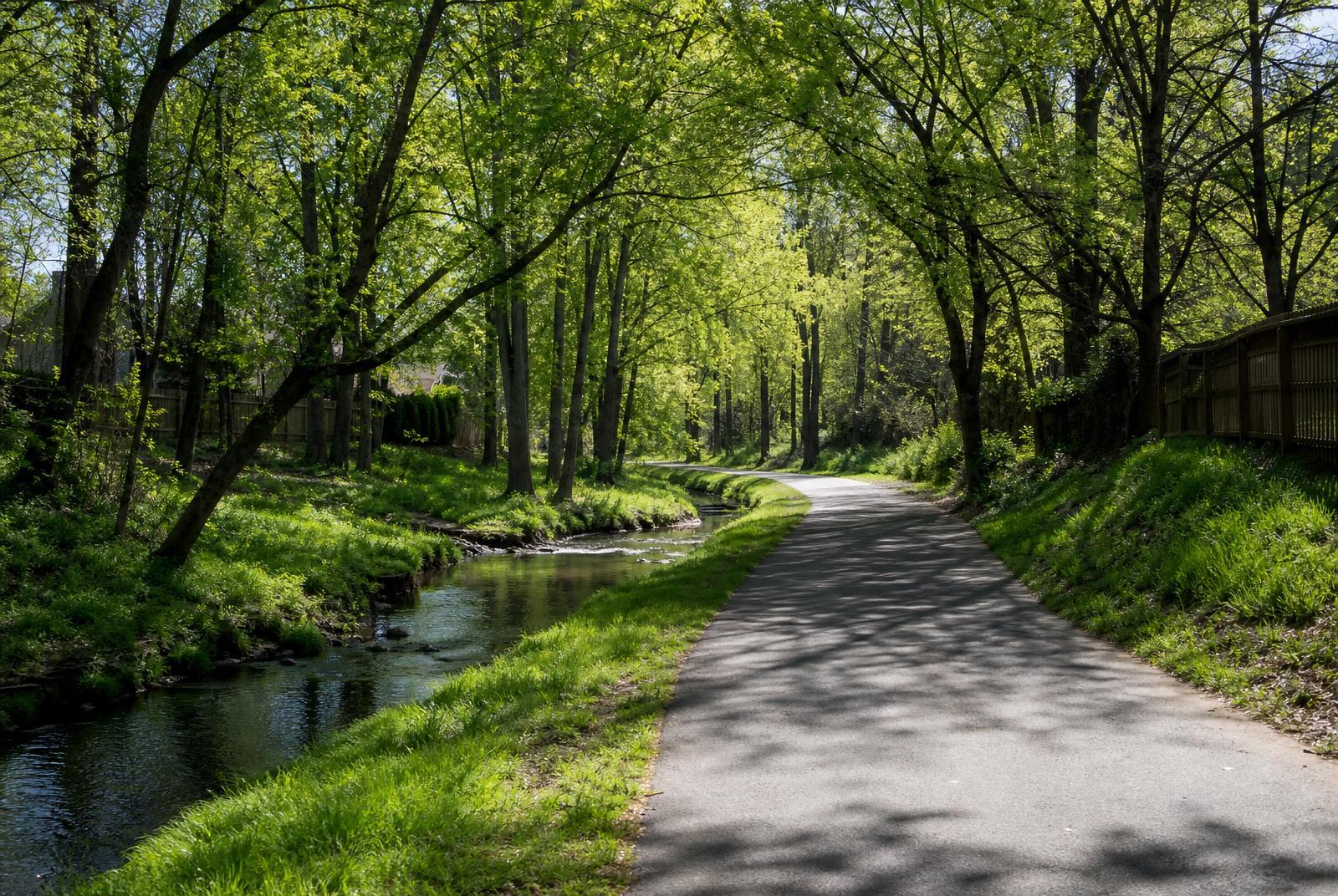
Weekends lean toward Sedgefield Park or Marion Diehl Park for a casual walk, a bike ride out to Little Sugar Creek Greenway or Freedom Park, and dinner on Montford Drive or in South End. Families with kids in youth sports find themselves regularly crossing into neighboring park systems, since Sedgefield's own park space, while real, is modest compared to Freedom Park's scale.
Seasons
Spring and fall are Sedgefield at its best — the mature tree canopy turning Charlotte's characteristic pollen-green and then amber, porches and yards getting real use. Summers are hot and humid like the rest of the Piedmont, tempered somewhat by shade from decades-old oaks that many streetcar-era neighborhoods lost long ago. Winters are mild by national standards, with the occasional ice event that, as anywhere in Charlotte, briefly shuts everything down.
Community feel
Sedgefield doesn't have the built-in civic infrastructure of some historic neighborhoods — no single dominant neighborhood association event calendar the way Dilworth or Myers Park might have — but informal community has grown alongside the wave of younger families moving in: group texts, neighborhood social media groups, and increasing turnout for whatever civic meetings do occur. It reads as a neighborhood in the process of building (or rebuilding) its own identity.
Getting around without a car
Sedgefield is not a car-free neighborhood, but it's more car-optional than most postwar subdivisions its age. The curving interior streets connect out to Park Road at several points, and a number of residents bike or walk that stretch regularly rather than driving it, especially once the weather cooperates in spring and fall. The LYNX Blue Line's Woodlawn and Scaleybark stations sit close enough that some residents use light rail for Uptown commutes or South End evenings instead of parking downtown, though neither station is truly walkable from the interior of the neighborhood — it's typically a short bike ride or a quick drive-and-park. See commute & transit for the fuller picture of how residents actually get to work.
Raising kids here
Family life in Sedgefield revolves heavily around the CMS assignment chain of Sedgefield Elementary, Sedgefield Middle (an IB program), and Myers Park High School, which shapes both weekday schedules and, for many buyers, the decision to move to this particular pocket of south Charlotte in the first place. Youth sports leagues, swim teams, and rec programs tend to pull families toward Freedom Park, Park Road Park, and other larger facilities rather than anything inside Sedgefield's own boundaries, simply because the neighborhood's park footprint is modest. Carpools to practices, informal playdate networks organized through neighborhood social media groups, and Halloween trick-or-treating on the interior loop streets (which see meaningfully more foot traffic than the through streets) are recurring themes families mention. Our schools page covers the academic side in more detail.
Pets and yards
Mid-century lot sizes work in dog owners' favor — yards here are generally larger than what you'll find in denser, older streetcar suburbs closer to Uptown, and fencing an existing yard is a common early project for new owners. Morning and evening dog-walking loops on the curving streets are probably the single most consistent form of informal neighborhood social contact, arguably more so than any organized event. For a longer outing, Renaissance Park and Reedy Creek both turn up in conversation as dog-friendly options within a reasonable drive, alongside the closer Sedgefield Park and Marion Diehl Park.
Practical realities of an older housing stock
Because most homes date to the 1940s through 1960s, day-to-day life here often includes the maintenance realities of a mature house: aging HVAC systems nearing or past their expected lifespan, original cast iron or galvanized plumbing in homes that haven't been fully renovated, electrical panels that may need upgrading before adding modern appliances or EV chargers, and mature trees that are a defining asset but also require occasional professional attention after storms. None of this is unique to Sedgefield — it's the tradeoff of buying into any established, tree-covered neighborhood — but it's worth budgeting for as a homeowner rather than treating it as a surprise. Our buying guide and architecture page go into more detail on what to expect from homes of this era.
Where lifestyle and real estate meet
A fair number of Sedgefield residents describe an evolving relationship with the neighborhood: they moved in for the location and the price relative to Dilworth or Myers Park, and stayed because the day-to-day rhythm — quieter streets, bigger lots, a short drive to almost everything — turned out to suit them better than they expected. That trajectory shows up elsewhere on this site too; see home values context for how that shift in perception has played out in the market itself.
How Sedgefield compares to its neighbors, lifestyle-wise
It's easy to describe Sedgefield in relation to what it's not: not as walkable as Dilworth's East Boulevard corridor, not as architecturally uniform as Myers Park's grand estate streets, not as new and dense as South End's apartment towers. What that comparison misses is what Sedgefield actually offers on its own terms — bigger yards than most of those neighborhoods, a quieter and more residential feel even at rush hour, and a location that keeps almost everything else within a ten-to-fifteen-minute drive. For a fuller side-by-side, see Sedgefield vs. nearby neighborhoods.
Working from home in Sedgefield
The shift toward remote and hybrid work has been noticeably good for a neighborhood like this one. A quiet street, a bigger lot with room for a dedicated home office or a converted garage, and easy mid-day errands at Park Road Shopping Center suit a work-from-home routine better than a denser, noisier corridor might. It's also visible in the renovation market — home office additions and finished bonus rooms are among the more common small-scale projects owners undertake, often alongside broader electrical and networking upgrades to support a full home office setup. See our smart homes page for more on wiring an older house for modern remote-work needs.
Holidays and the annual calendar
The neighborhood's seasonal rhythms lean heavily on informal traditions rather than official events: porch decorating in the fall, string lights through the winter holidays, and yard work weekends bookending the growing season each spring. Because houses here tend to sit closer to the street than in some newer subdivisions, holiday decorating is a genuinely visible, shared activity along a given block, in a way that longer driveways and deeper setbacks elsewhere can dampen. It's a small thing, but it's one of the details residents mention when explaining what the neighborhood actually feels like to live in, as opposed to what it looks like from a listing photo.